

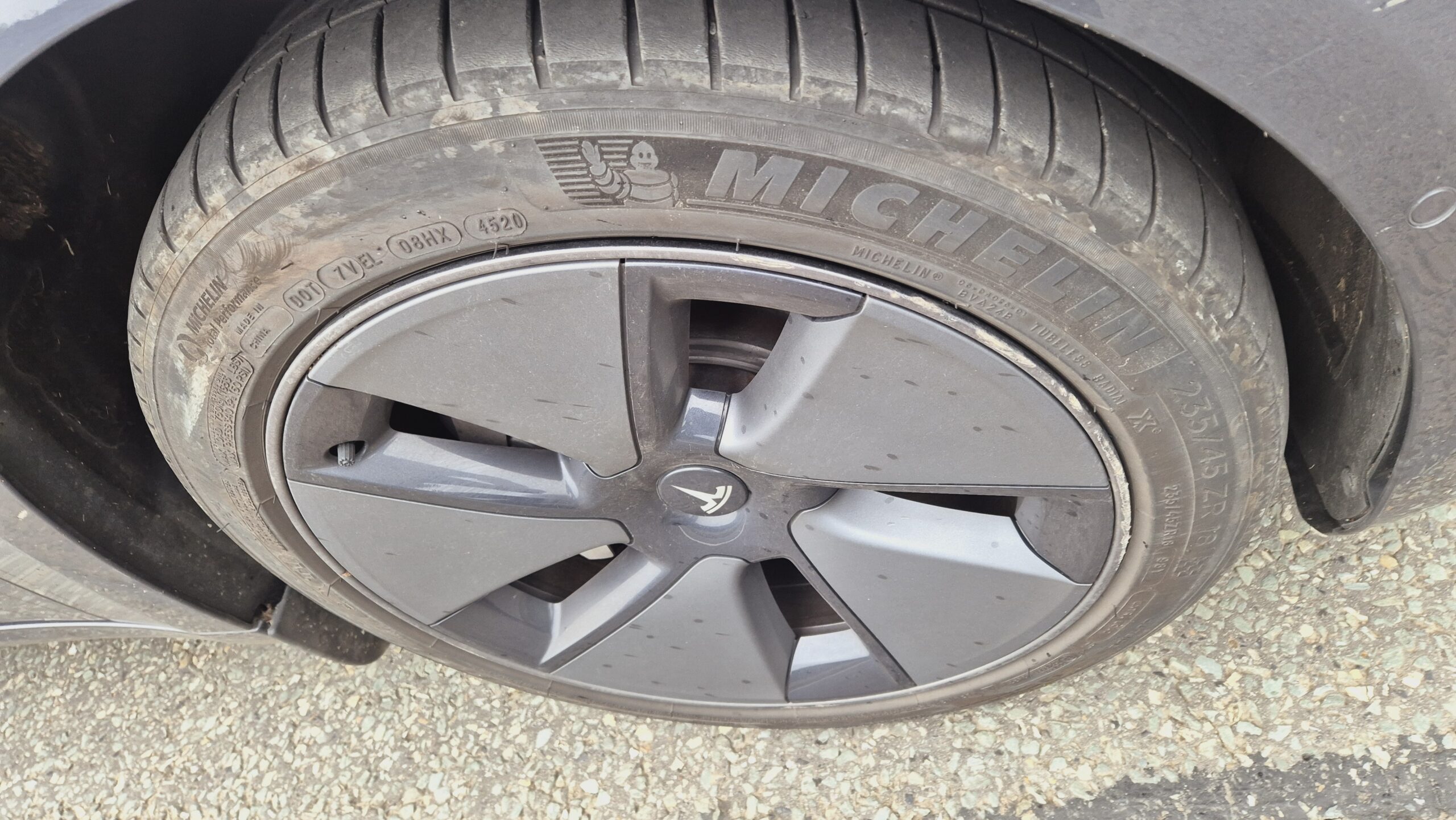
According to supercarblondie.com, Michelin has introduced two new tires targeted squarely at electrified vehicles: the MICHELIN Primacy 5 Energy and the MICHELIN Pilot Sport 5 Energy. Both are engineered to shave energy loss and stretch driving range, while keeping braking and handling performance intact.
At the heart of the launch is Michelin’s Energy Passive 2.0 Technology, which uses functionalized elastomers in the tire compound. Michelin says this formulation delivers a 40% longer lifespan than competitor options and cuts wet braking distances by 8% versus the previous generation.
The efficiency claims are striking. Michelin reports up to a 10% reduction in energy use for battery EVs, which it translates into as much as 70 km of extra range per charge in ideal conditions. For conventional gasoline cars, the company cites a 6% drop in fuel consumption, roughly 0.3 L/100 km saved, equivalent to about £147 or €169 per year and 327 kg less CO2 emissions annually.
The Primacy 5 Energy earns a Triple A rating for efficiency, wet grip, and noise. That combination is rare, because improving rolling resistance often forces compromises in grip or wear. Michelin says the new compounds and tread designs reduce rolling resistance while maintaining strong grip in both wet and dry conditions, which is key to preserving EV battery life.
The Pilot Sport 5 Energy brings a sportier focus, drawing from Michelin’s motorsport knowledge for sharper handling. It carries an A rating for rolling resistance as well, and Michelin highlights its endurance at sustained speeds up to 300 km/h, aimed at high-performance cars that are now offered in electrified and hybrid variants.
Both tires are specified for internal combustion, hybrid, and electric vehicles. Michelin also notes that numerous major automakers have already approved the new models for factory fitment, reflecting the growing OEM demand for low rolling resistance without a safety penalty.
Michelin executive Jean-Claude Pats summed up the intent, saying the company is delivering ‘no-compromise innovation for modern mobility.’ The product launch also ties into Michelin’s broader sustainability push, which aims for 40% sustainable materials by 2030 and 100% by 2050.
For drivers, the takeaway is simple: these tires are designed to reduce the primary enemy of EV range, rolling resistance, while keeping braking and handling where consumers expect them. That matters whether you drive a battery EV, a plug-in hybrid, or a conventional car and want better economy without sacrificing safety.


